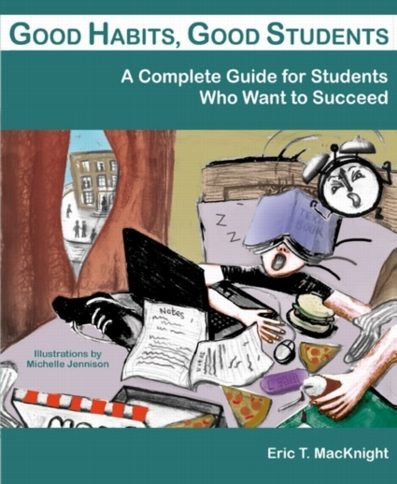

Finding inspiration

What do students need to be successful in school? What do people need to be good learners, whether in school or on their own?

They need three things.

  1. Reading Anyone can be a reader, and everyone benefits from reading.
  2. Good Habits Although schools expect students to have good habits, they rarely take the time to teach good habits. But anyone can acquire good habits, and everyone can benefit from them.
  3. Inspiration Without inspiration, what will motivate you to read, develop good habits, and learn? Inspiration is the engine that drives our efforts to improve. But why is it so hard to find?

The Lack of Inspiration

Potential sources of inspiration are all around us–so why are so many of us uninspired?

1. Daily living beats the inspiration out of us. Let’s face it, the daily routine is a grind. Seven lessons a day, five days a week is a grind. A lot of it is tedious, and dull. Often, the purpose of what we’re doing is unclear. Often, the connections between what we do in one lesson with what we do in other lessons are obscure, or missing altogether. The daily routine grinds us down.

2. We are out of touch with ourselves. We spend so much time and energy worrying about what others expect of us–how we should look, how we should act, what we should say, what music is cool, what fashions are cool, etc.–that we rarely take time to look inward and ask the really important questions: Who am I? Where am I? What should I be doing? We live in what has been called an “amusement culture”. This is interesting, because historically it is so bizarre. In most times and places, a society’s culture is defined by what people make and do. But in an amusement culture, most people make nothing; all they do is buy things, and amuse themselves. Shopping and playing, however, cannot be the centre of a good life. If shopping and playing are the centre of your life, you have an empty life–a life in which you are alienated from yourself. You’re not doing anything; you’re not making anything; you’re just keeping the economy going by buying things–things that, much of the time, you don’t even need. Things that, in a very short time, you won’t even want.

The 85-year-old Test

Here’s one way to get back in touch with your life. Imagine that you are 85 years old. When you look back on your life, you feel happy and proud. You were, most of the time, the best person you could be. The world, or at least the part of it you lived in and the people you touched, is better off because of you. How did you live your life?

What Is Your Dream?

“I have a dream!” proclaimed Martin Luther King, Jr. What is your dream? If you have a dream to pursue, a vision to fulfill, then you will be inspired. Everything you do, every day, will be a small step toward the realization of your dream. What is your dream? Excuse me? Did you say, you have no dream? When did you stop dreaming? Why? Find your dream. Follow your dream!

Who Will Care About You?

The economy will be very happy if you spend your life buying things. The government will be very happy if you spend your life working in a job you hate, just so long as you are producing something useful to the system. The government and the economy have no interest, however, in your personal happiness. They have no interest in whether, when you are 85 years old, you will look back on your life with pride and satisfaction. They don’t care whether you have a dream. Do you care?

Reading is crucial to learning. Good habits are crucial. But without inspiration, you will have little reason to read, and little reason to cultivate good habits. In fact, you will have little reason to learn, to grow, to be the best person you can be.

Don’t let the forces of dullness grind you down.

Get inspired!

Inspiration comes first

Anyone can build better habits. Anyone can master the habits that lead to success in school. But what will motivate a student to work hard and build good habits?

Inspiration.

If you are uninspired, the first job is to start dreaming. Who do you want to be? Where do you want to go? Once you have a dream, you won’t have to search for motivation. Every time you feel tired, just think of your dream and the energy will come back. Follow that dream!

And teachers, remember that unmotivated students are uninspired students. Help them find a dream that will make the perspiration worthwhile.

Inspire them first; then ask them to work.

How Teachers Can Help

Students can build good habits and break bad ones on their own, if they are determined. But success rates rise dramatically when they get support from teachers, parents, and friends.

So what can teachers do to help?

Require students to write their assignments in a homework diary.

This simple act works wonders. The key is for teachers to require it, not simply remind or nag. Teachers who have the bad habit of shouting out the homework assignment as the lesson is ending and students are packing up encourage students to develop the bad habit of not writing down their assignments. Students who don’t write down the assignment are much more likely to forget it, or to remember it incorrectly.

Instead, teachers should develop some good habits that will help their students develop good habits. Give out the homework assignment before the end of the lesson, and provide time for students to take out their diaries and copy it down. When students are working, move around the room and check homework diaries. Praise those who have written down the assignment; remind those who haven’t, and watch while they do it. Do this every day: daily repetition builds habits.

With a very small investment of class time, teachers can dramatically improve their students’ performance. Not only will students complete your homework assignments—they will develop an essential good habit that will serve them well for years.

Try it. Then, when you see what a difference one teacher’s efforts can make, enlist your colleagues and make this a school-wide initiative.

How to stop procrastinating

Lifehacker cites “the goal-setting web site 43 things“, where it appears that the Number 1 goal of their readers is to “Stop procrastinating.”

This is a nice idea, but it’s not a useful goal. It’s like saying, “My goal is to stop being lazy”, or “My goal is to do better in English”. Goals like these lead nowhere.

Instead, set goals that refer to specific activities that can be repeated daily. Activities that can be counted or measured. I agree that procrastination is a big problem, but when do you procrastinate? If you put off packing a lunch until morning and then oversleep, set a goal like “My goal is to pack my lunch before I go to bed.” If you put off doing homework, set a goal to “Start homework the day it’s assigned” or to “Hand in every assignment on time”.

Then keep a daily written record, and set alarms or reminders to keep on track. Find a partner, or ask your parents to help remind you—most of us do better if we’re not trying to build new habits all on our own.

But don’t get stuck trying to “stop procrastinating”!

Read every day [book excerpt]

Good students are readers.

Why? First, they have a large store of background knowledge. Second, they have large vocabularies. Third, they can read quickly with excellent comprehension.

Reading is a habit that can be acquired, like any other habit. The lucky people acquire the habit of reading when they are little children. They’re the ones who must be forced to put down their books to come to the dinner table; who stay up past their bedtime, reading by flashlight under their blankets; who sit in the backseat of the car with their nose in a book; and who long for summer, when they will have time to do nothing else but read.

If you are one of these people, skip the rest of this section and go on to other good habits that you may not have acquired.

If you’re not yet a habitual reader, begin now. Continue reading “Read every day [book excerpt]”

Essential: the homework diary

Whether you call it an agenda, a planner, or a homework diary, no single piece of equipment is more important to staying organized.

However, not all homework diaries are created equal.

To be most effective, a homework diary should remind you of essential daily tasks and make it quick and easy for you to check them off as they are completed.

For example, it’s not enough simply to provide space to write down homework assignments. There should be a blank for each subject that might assign homework that day, followed by a quick way to indicate that homework either was or was not assigned, followed by space for writing down the assignment and the due date.

Here’s a sample excerpted from the SSIS Homework Diary that I designed last spring. Middle-school students at SSIS have a maximum of three homework assignments per day.

MONDAY
Today’s Homework
1. ___________ HW/NHW
2. ___________ HW/NHW
3. ___________ HW/NHW

Assignments
1. ____________________
______________________
______________________
______________________
______________________
______________________
______________________
______________________
______________________
Date Due ________

The students fill in the three subjects on their homework timetable for that day. For each class, they circle HW if they have homework, and NHW if they have no homework.

This “NHW” feature is important. Without it, no one can tell whether (a) no homework was assigned, or (b) the student forgot to write down the homework.

The key to forming habits is repetition, and a well-designed homework diary helps remind students to record their assignments, thus building one of the good habits essential to success.